
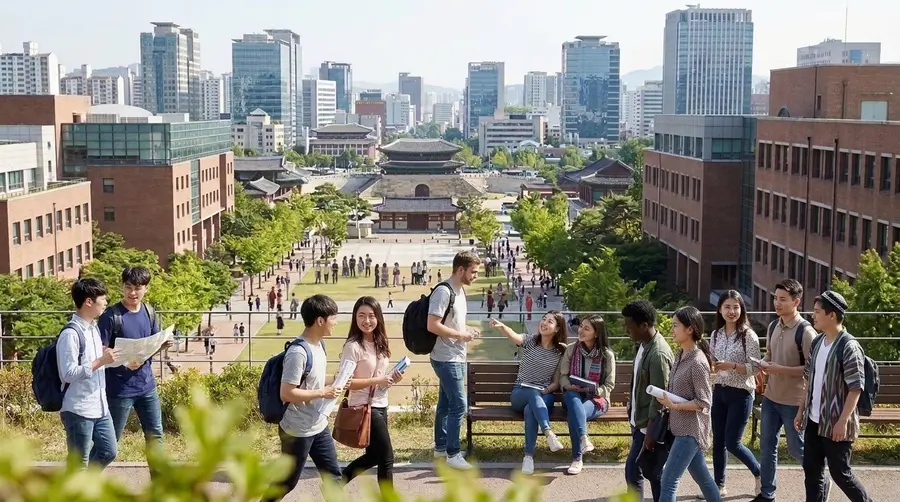
The Financial Times (FT), a leading British business newspaper, has highlighted the rapid growth in international study in South Korea, calling “Seoul the new Paris for university students studying abroad.” Students from around the world who once headed to traditional study destinations such as London and Paris are now turning to Seoul. The number of international students studying in South Korea has surged 69% in three years, surpassing 300,000 this year to reach an all-time high.
“Seoul Is the New Paris”: What Makes the World’s No. 1 Student City?
Seoul ranked first for the second consecutive year in the QS Best Student Cities ranking, published by the UK-based higher education rankings organization, ahead of Tokyo (second), London (third) and Paris (seventh). It also ranked first worldwide in the University Rankings indicator, reflecting the concentration of world-class universities in the city. Seoul’s Affordability score improved from the previous year, while its Desirability score, which takes safety and air quality into account, also rose.
The FT looked beyond Seoul’s popularity to the combination of qualities it offers: “Costs are manageable, its culture is consumed around the world, there are opportunities to work after graduation, and the city itself is fun.” That suggests the choice of where to study abroad is shifting away from family and ethnic ties toward the appeal of the city itself.
Up 69% in Three Years: International Enrollment Passes 300,000
The numbers underscore that shift. International student enrollment in South Korea climbed from about 182,000 in 2023 to 307,000 this year—an increase of 69% in just three years.
The surge has given momentum to the South Korean government’s Study Korea 300K initiative. The government had aimed to attract 300,000 international students by 2027 but reached that target a year early. While the growing number of students also means fiercer competition among applicants, it has prompted universities and the government to move quickly to improve policies for international students. Discussions are underway on a range of measures, including easing restrictions on part-time work and adjusting requirements for job-seeker and employment visas after graduation.
Five Essential Steps to Prepare for Studying in South Korea
Thorough preparation is essential for students hoping to make a successful start in South Korea, which has emerged as a hub for international students.
① Korean proficiency: TOPIK Level 6 can mean a full-tuition scholarship
Most major universities require at least Level 4 on the Test of Proficiency in Korean (TOPIK). Many universities waive half of first-semester tuition for students with Level 5 and all of it for those with Level 6. Improving your Korean proficiency before applying is one of the most reliable ways to reduce costs. Students whose Korean is not yet strong enough can prioritize universities that offer degree programs taught entirely in English.
② Admissions timing: Two intakes a year, with preparation starting at least six months early
South Korean universities admit new students twice a year, in spring (March) and fall (September). Application deadlines typically fall five to seven months before enrollment, so students aiming to start in September 2027 will need to submit applications that spring and manage their schedules carefully.
③ Documents: The most time-consuming hurdle
Translating and notarizing high school diplomas and transcripts, then obtaining an apostille or consular authentication, can take anywhere from several weeks to several months. Applicants from countries without a 12-year school system should check their eligibility carefully in advance. Preparing documents should be a top priority.
④ Financial requirements: Tuition, housing and proof of funds
Tuition can run to several million won per semester, depending on the field of study, with housing and living expenses on top of that. Visa applicants must also demonstrate that they have sufficient funds, typically through a bank balance certificate. Failing to meet this financial requirement is the most common reason for a visa denial.
⑤ Plans after graduation: Understand visa requirements from the start
Students hoping to settle in South Korea would benefit from learning the requirements for a D-10 job-seeker visa and an E-7 employment visa for designated activities as early as the admissions stage. Their choice of major and TOPIK level can significantly shape their employment options in South Korea after graduation.
Seoul combines the convenience of city life with nature and the appeal of K-culture, which has captivated audiences worldwide. It has become more than an increasingly popular place to study abroad: It is firmly establishing itself as a place where talented people from around the world can begin pursuing their ambitions.


댓글 (0)
댓글 작성
댓글을 작성하려면 로그인이 필요합니다.
로그인하기